Archive for the ‘Motorcycle Safety’ Category

Motorcycle Cruise Control With Smarts?

Monday, December 7th, 2020
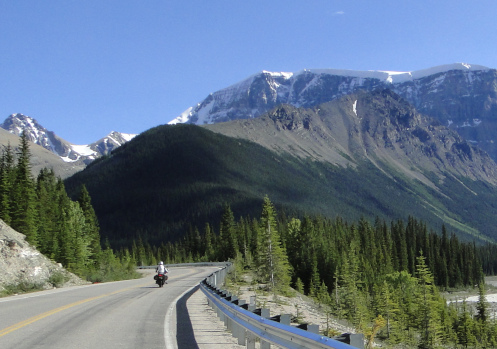
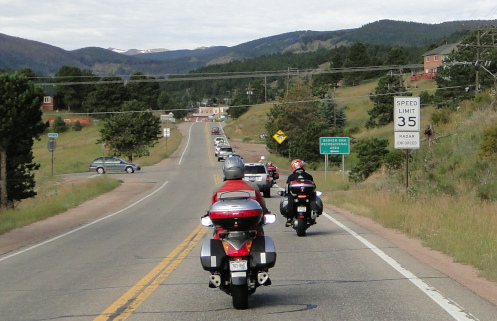
motorcycle on highway in Canada

This is the kind of situation where these systems would kick in.

I’m writing this on Sunday and there is an article in today’s Denver Post that really caught my eye. Maybe you read it, if you subscribe, but it seems most people don’t these days so I figure it’s worth pointing out. The article is titled “Smart cruise control comes to motorcycles.” (It’s actually reprinted from the New York Times.)

According to this article, both BMW and Ducati are introducing this system on bikes. The system controls throttle and braking.

No surprise to any of us, the challenges of creating something of this sort for motorcycles is vastly different from creating the same for cars. As the article notes, “because motorcycles don’t have automatic transmissions, they could stall or even fall over if the technology were allowed to bring them to a complete stop.” So these systems only work if you’re going more than 20 mph.

The systems use radar sensors to keep track of vehicles ahead of you. Mainly they will latch onto a vehicle in front of you and match your speed to that. If there is no vehicle ahead of you it will cruise at whatever speed you set it for, up to 100 mph.

The systems are only programmed to pay attention to vehicles in your lane moving in the same direction. If you’re at an intersection and someone pulls out in front of you it will not register, so hit your own brakes!

According to the article, the project manager at Ducati said the system “is a convenience system, not a safety system; it is there to enhance comfort during highway travels.”

Obviously, the fact that motorcycles lean makes for big differences than systems for cars. BMW’s director of product development is quoted saying that “the system must be able to detect cars and other motorcycles while it is leaned over.” When you’re leaned over above certain speeds both systems will slow you down, with Ducati pushing that point all the way to 50 degrees of lean.

So that’s just a brief overview. If you’re interested I would definitely recommend you read the whole article.

Biker Quote for Today

I Googled my symptoms . . . turns out I just needed to go ride.
Dude, You’ve Got Bad Tires

Monday, November 23rd, 2020
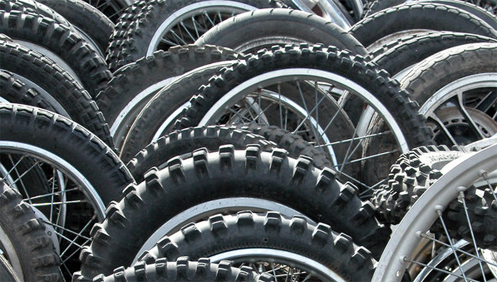
piles of tires and wheels

Tires are pretty important, do ya think?

At our last stop one year, as the OFMC headed toward Espanola, NM, I had mentioned to Randy that the tread on his front tire was getting pretty thin and he’d be needing a new tire by the time we got home from this trip. He shrugged it off, saying he figured he’d let it go till next spring because after this trip he wouldn’t be riding that much more the rest of this year.

We pulled over for another break at Ojo Caliente and he apparently took second look, and also checked his rear tire.

“I’m concerned,” he told us. “I’ve got another 500 miles to ride to get back to Denver and I don’t think my back tire’s going to make it.”

We crouched down behind his bike to inspect the tire.

“It looks OK to me,” said someone.

“Roll it forward,” I said. “Let’s see the whole tire.”

Sure enough, as we saw the whole tire, there was a spot about 2 inches by 3 inches where there was no rubber at all, just the steel belt showing through.

“You’re not going home on that tire,” I told him. “You need to ride the extra 25 miles into Santa Fe and have that replaced before you do anything else.”

I knew the situation Randy was facing. Once before, at the North Rim of the Grand Canyon, I had noted to the other guys that my tread on my rear tire was getting pretty thin. And then when I checked it again the next day it was almost nonexistent. We had gasped at how quickly rubber can be worn away when a tire is ready to give up the ghost. Then in April of this year I had ridden down to Scottsdale expecting my tires to get me home and found myself immediately hitting a shop there for new ones as the tread vanished before my eyes on the way down.

With the tread completely gone, Randy had no business going anywhere except straight to the nearest shop. But he had other ideas.
Maybe Santa Fe was only 25 miles away, but, he said, it was in the wrong direction. He made some phone calls and found a shop in Alamosa, back in Colorado, where they had the right tire in stock and could take care of him as soon as he arrived. Never mind that it was 115 miles away.

Long story short, he made it OK. Friggs went with him as a back-up but the tire got him there. Was there more belt showing when they reached Alamosa? You better believe it. I would never have ridden that far on that tire, and I thought Randy was an idiot for doing it, but fortune was smiling on him that day.

They say it’s better to be lucky than to be smart. Me, I’d just as soon give my luck a helping hand by making wise choices.

Biker Quote for Today

Why motorcycles are better than women: Motorcycles’ curves never sag.

Ride Safe

Monday, November 2nd, 2020
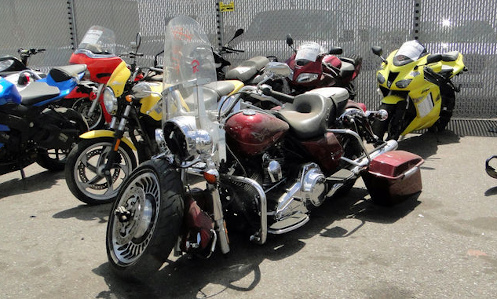
junkyard Harley

Sadly, someone obviously did not ride this poor Harley safely.

“Have a safe ride.”

That’s an admonishment we’ve all heard countless times and my standard weak-joke response is along the lines of, “Oh darn, I wasn’t planning to, but I will if you insist.”

It’s not that we ever plan to have an unsafe ride, but then, that’s why they’re called “accidents.”

At least many people use that word, but among those serious about motorcycle safety, the preferred word is “crash.” The point being that a crash does not happen by accident, it is allowed to happen by riders who fail to remain alert and to engage in basic crash-avoidance practices.

Don’t get me wrong. Anyone who rides knows that the primary scenario for motorcycle crashes is when someone in a car pulls out in front of you or turns left in front of you. It’s their fault.

Or is it? Is it entirely their fault if you could have done something to prevent the crash? (Within reason: You could stay home and never go anywhere and that would prevent a crash, but that’s not reasonable.)

More importantly, does it matter that it’s primarily their fault if you’re the one with the concussion and broken bones? I have a friend, Jungle Fuhrman, who argues that without exception, if you are involved in a crash, you screwed up. I tend to agree with him.

When I was preparing to take RiderCoach training several years ago, the program put together by the Motorcycle Safety Foundation (MSF) for training the people who train new riders, I rereading the Basic Rider Course (BRC) Rider Handbook, which is the study manual given to all the beginning rider students. (Which is to say, I had taken the BRC myself some time before that.)

The BRC focuses on both riding skills and the rider’s mindset. One key point they make is that crashes seldom have one specific cause; in fact, they usually have several. They call this the Crash Chain, and use an illustration of a motorcycle chain looping around two sprockets, connecting one sprocket (you) to the other (the crash). Each link is a factor that contributes to the crash. Break any one of those links and the crash is avoided.

So now that idiot talking on his cell phone is turning left in front of you. Is it foreordained that you will T-bone him? Are you traveling at an excessive speed? Were you day-dreaming as you approached the intersection? Were you not thinking about the fact that the setting sun is directly behind you, making it difficult for him to see? If you answer yes to all those questions then yes, you may indeed be irretrievably headed for a crash.

But you had it in your power to break that crash chain, and didn’t. He’ll get the ticket but you’re the one who will pay in pain.

Some highway safety agency used a catch-phrase years ago that has stuck with me and I think it bears repeating here: Safe driving is no accident. For motorcycling I’d go with that times 10. Have a safe ride.

Biker Quote for Today

Why motorcycles are better than women: You don’t have to deal with priests or blood-tests to register your motorcycle.

More From The 2020 MOST Report

Thursday, October 22nd, 2020
motorcycles on highway

Keep the rubber side down, OK?

What else can we glean from the 2020 annual report of Colorado’s Motorcycle Operator Safety Training (MOST) program?

How about this. Bullets copied from the report with my comments added in parentheses.

Motorcyclist Fatalities – 2019

  • 103 motorcyclists were killed in motorcycle crashes in 2019, 92 were male, and 11 were female. Ninety-three were motorcycle operators, and ten were motorcycle passengers.
  • Motorcyclist fatalities represented 17.3% of Colorado’s total traffic fatalities (103 of 596). (Yeah, and we sure aren’t 17.3% of the vehicles on the road.)
  • The number of motorcyclist fatalities remained the same in 2017, 2018, and 2019 at 103.
  • 71 motorcycle operators involved in fatal crashes were determined to be “at fault” in the crash.
  • 43 of the fatal motorcycle crashes involved only the motorcycle and no other vehicle. (Can’t blame someone else, at least in most of these cases. There’s always the possibility a rider swerved to avoid an idiot and paid with their life.)
  • In 2019, 24 motorcycle operators killed in a fatal crash were suspected to be impaired by alcohol and/or drugs.
  • 48 motorcycle operators killed were not wearing a helmet. (This means 55 who died were wearing helmets. Helmets are good but don’t let anyone try to tell you they’re a cure-all.)

Of 1,965 motorcycle crashes tallied, where did they happen?

Non-intersection: 1,022. At intersection: 595. Intersection related: 160. Driveway access related: 114. Ramp: 42. Roundabout: 19. In alley: 11. Parking lot: 2.

So OK, we all know the dangers of drivers turning left in front of you, but apparently the majority of crashes don’t even occur at intersections. What causes these? I think we’ll start to get some answers in the next section.

What was the “First Harmful Event” as the report terms it?

Overturning (non-collision): 548. Collision with curb/median: 136. Front to rear collision: 134. Other non-collision: 90. Side to side collision–same direction: 86. Collision with wild animal: 48. Collision with other object: 41. Collision with parked vehicle: 29. Collision with embankment: 27. Collision with guard rail: 26.

So overturning (non-collision) is the top event? What caused that? The top violations of at-fault riders again helps explain. These are apparently what the riders were actually cited with after the crashes.

Careless driving: 469. Driving under the influence of alcohol: 48. Reckless driving: 47. Following too closely: 45. Improper driving on mountain highway: 21. Failed to drive in designated lane: 12. No insurance in possession: 12. Unsafe lane change: 8. Improper turning left: 8. Improper passing on right: 8.

So careless driving is a really big factor. That’s worth noting. Next we have top contributing human factors of riders at-fault.

Driver inexperience: 224. Driver unfamiliar with area: 73. Driver preoccupied: 51. Evading law enforcement officer: 16. Illness/medical: 7. Driver fatigue: 6. Distracted by a passenger, food, objects, etc.: 4. Driver emotionally upset: 3. Physical disability: 1. Other: 453.

So in other words, with 453 “Other” there must be an unknowable number of human factors that, under the right combination of circumstances, can lead to a crash. Next is top movements of at-fault riders.

Going straight: 603. Making left turn: 89. Slowing: 69. Changing lanes: 58. Making right turn: 56. Passing: 41. Weaving: 35. Avoiding object in roadway: 28. Making U-turn: 7. Entering/leaving parked position: 3.

There it is! That’s what causes motorcycle crashes! In 603 cases the riders were going straight! Don’t these people understand you’re supposed to ride the curvy roads? OK, yeah, I’m funny.

Hopefully there is some tidbit of information here that strikes you and that you will incorporate into your mindset when riding to make you a safer rider. Something like, wow, most crashes don’t even happen at intersections, I guess I’d better be more alert all the time. And maybe not; well, I offered it to you.

Biker Quote for Today

You might be a Yuppie biker if you can’t figure out why the battery on your new bike won’t stay charged.

2020 MOST Report On Motorcycle Crashes Now Out

Monday, October 19th, 2020
MOST Program annual report

MOST Program annual report

The 2020 annual report of Colorado’s Motorcycle Operator Safety Training (MOST) program is out and more than anything it looks like last year’s report. In fact, the number of fatalities has remained steady at 103 for three years in a row now. This is down from an all-time high in 2016 of 125 fatalities. The 2020 report addresses crashes in 2019.

As would be expected, the counties with the highest number of fatalities are the counties with the highest populations. These include Adams County (10 in 2019, 53 in the last five years), Denver (15 and 63), El Paso (19 and 59), and Jefferson (13 and 63). The 10 fatalities in Adams County matches the previous year and the 13 in Jefferson County is one higher than 2018, but there were considerable increases in Denver (7 up to 15) and El Paso (12 up to 19).

The age groups of those who died were largely stable with the exception of the 40-49 age group, which has risen from 15 to 21 in the last three years, and the 50-59 age group, which has declined from 20 to 16.

Looking at overall statistics, in 2019 there were approximately 120,000 vehicle crashes statewide, of which 1,965 (1.6%) involved motorcycles. Those 1,965 included 115 riders who took MOST training in either 2018 or 2019.

OK, here’s a statistic I didn’t understand at first but think I do now: Of the 1,965 crashes involving a motorcycle, 1,361 crashes resulted in injury, and 96 crashes resulted in a fatality. I wondered how could it be 96 if there were 103 fatalities but then I realized that several of those crashes must have resulted in two or more motorcyclists killed.

Here’s another interesting statistic that does not reflect well on MOST: Of the 1,965 motorcycle crashes, 1,269 of the motorcycle operators were at fault in the crash (64.6%). Among the 115 motorcycle operators who were MOST students and had a crash in 2019, 76 were at fault in the crash (66.1%). So how effective is training, really? Despite that I still have to believe getting training is better than not getting training.

This next stat speaks better of MOST: In 2019, there were 154 crashes where alcohol or drugs were suspected among motorcycle operators at fault in a crash. 127 of the motorcycle operators were suspected of alcohol use only, 18 operators were suspected of drug use only, and 9 motorcycle operators were suspected of both alcohol and drug use. Only eight MOST students were suspected to be impaired by drugs or alcohol at the time of the crash.

Perhaps that implies that people who are responsible enough to get training are also more responsible about impaired driving in general.

There is more information to be mined from this report and I’ll continue with that in my next post.

Biker Quote for Today

We know you’re a poser if you never ride to work.

Oh No, Not That Guy

Monday, August 31st, 2020
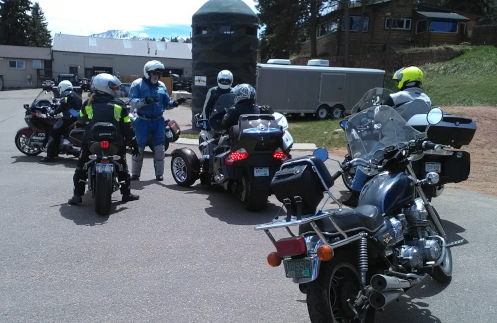
motorcycles

On an RMMRC ride.

I did a ride Saturday with the RMMRC and just before we were about to head out one last rider showed up. When I saw who it was I groaned to myself–not him!

Let me explain. I wrote about this previously, at the time, so I’ll just recap. This particular rider came along on most of the earliest rides I did with the RMMRC and he consistently rode much too close, right on the tail of whoever was in front of him. I mean, to the extent of having to hit his brakes and run off onto the shoulder when that person in front touched their brakes. Dangerous!

I want to make mention that a guy who read that earlier post put up a response saying perhaps this guy has poor eye-sight. He said the same thing had happened to him once and it turned out the guy was nearly legally blind. So in order to see where he was going he stuck right on the tail of the person in front of him. That sounded pretty plausible to me.

Well, this guy had not shown up for quite some time and that was fine with me. But then Saturday, there he was. I just wanted to make sure I was not the one in front of him. Fortunately (for me, not Bob), he pulled right in behind Bob, who was leading the ride. So I was several bikes behind him.

I watched with interest as we headed out. Surprisingly, this guy stayed pretty much staggered away from Bob and it didn’t look like he was crowding him at all. Maybe it was because the roads we were on were pretty much straight and it was easy to stick with the white line on the side of the road. Who knows.

Anyway, we got out to Kiowa, to Patty Ann’s, and had lunch. Leaving there we had one group of five who were inclined to go home via one route while the other group of five wanted to take a different route. So we split up. The question arose, who is going to lead the group I was going with. Someone said, “How about Ken?” Fine, I’m perfectly happy taking the lead but of course the person in question was also going with this group. I tried to figure how I could make sure he was not right behind me but he was the first out along the road and the others lined up behind him. He was going to be right behind me. Dang!

Well, I don’t know what the deal is. Maybe he had cataract surgery and sees a whole lot better now. Maybe it’s just the straight roads out east of the city. Whatever the explanation, he stayed all the way to the right as I stayed all the way to the left, and he even rode a good ways behind me, not just 10 feet back. What a relief.

So now maybe next time he shows up I won’t cringe quite so much. But I’m still going to cringe a little.

Biker Quote for Today

“TAT” (aka Technical Anti-talent) referring to any student that despite every possible analogy, teaching method, or other, could not master even the most fundamental motor coordination needed to ride a motorcycle. These guys and gals we kindly failed as not to harm themselves or others. They were few and far between….but certainly out there.