Archive for the ‘Biker Issues’ Category

DOT Sec. Mary Peters Good for Bikers, Wrong on One Priority

Friday, August 15th, 2008

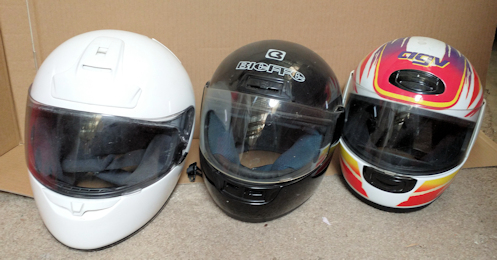
I’ll cut straight to the chase. I still disagree with U.S. DOT Secretary Mary Peters in her effort to divert money earmarked for motorcycle rider training to promote helmet usage.

The Motorcycle Riders Foundation sums up the issue in this way:

The . . . funds were a direct result of years of intense lobbying by state motorcyclists’ rights organizations and individual motorcyclists from across this country, and were intended for two very specific aspects of motorcycle safety — motorcycle rider education and motorist awareness of motorcycles. These two aspects of motorcycle safety have been grossly under-funded at the state level for years, often solely at the direct expense of motorcyclists themselves through licensing and registration fees. . . . Should Peters get her way, that trickle becomes nothing but a drip.

A little background. I wrote about this first in this post after reading about it in American Motorcyclist, the monthly magazine of the American Motorcyclist Association. I was pretty down on her. Randy Bingner then replied that what Mary Peters is doing for the motorcycling community is substantial and overall, “It is very difficult to be critical when you look at the big picture.”

I told Randy I’d take another look and delve deeper into the issue. Well, I’ve done that. I wrote favorably about her efforts in general two days ago but I still have to disagree on this one point. And I’m not the only one.

Here are three quotes from three organizations that sum this matter up pretty succinctly:

The only true steps to motorcycle safety are proactive measures which prevent a collision from occurring at all rather than reactive steps that may offer some level of injury reduction only after a crash has already taken place. — Motorcycle Riders Foundation

The evidence is obvious: Crashes kill bikers. Conversely, Crash Prevention saves lives. — ABATE of North Carolina

We all know that “safer crashes” are no substitute for “crash prevention.” — ABATE of Arizona

This is what I’ve said right from the beginning. To quote myself, I said “That’s why I believe that diverting funds from motorcycle safety training to mandating helmets is wrong-headed. We all need to wear helmets at times; some of us wear them all the time. We should all also take an occasional refresher training course. The Motorcycle Safety Foundation and ABATE have expanded their offerings lately due to demand. What we don’t need is some bureaucrat, even one who rides, cutting training funds.”

I stand by that statement. The point I want to make however goes back to what Randy was saying. We are better off having a biker sitting in her chair than not. Mary Peters has done a lot of good things in her tenure in office. But nobody is perfect, and even family members can disagree. What we need to do now is not scream obscenities at her for her one mistake, we need to applaud her for the good things she is doing and work diligently and patiently with her in trying to help her see the error of her ways in this one area. And fight it hard in Congress if that becomes necessary.

Biker Quote for Today

Most vehicles have one person in them. So if you have one person riding a 400-pound vehicle, and another person riding a 4,400-pound vehicle, why are you putting the restrictions on the motorcyclist? You should really be putting the restriction on the person driving the SUV. — Jay Leno

Follow-up on Mary Peters, Secretary of US DOT

Wednesday, August 13th, 2008

At the urging of Randy Bingner I have been doing some research to learn more about U.S. Secretary of Transportation Mary Peters’ efforts in regard to motorcycles and motorcycling. Let me recap.

Mary Peters rides a Harley. She’s one of us. And as one of us she has used her authority to promote issues of concern to us. For the most part this is very good. You can read the DOT’s recommendations in its Action Plan to Reduce Motorcycle Fatalities. The proposals include:

  • Conducting the Motorcycle Crash Causes and Outcomes Study, a comprehensive examination of the factors that causes crashes, which will help the Department develop stronger programs and strategies to combat the rising trends in motorcycle crashes.
  • Developing National Standards for Entry Level Motorcycle Rider Training that will set the baseline for novice motorcycle rider training programs conducted in the United States.
  • Amending Federal Motor Vehicle Safety Standard (FMVSS) No. 218, Motorcycle Helmets, to address the falsification of helmet certifications facilitated by the current labeling requirements of the motorcycle helmet standard.
  • Distributing Roadway Safety for Motorcycles, a brochure containing official guidance on designing, constructing, and maintaining roadways for increased motorcycle safety, to road planners, designers, and engineers.
  • Creating a training program designed to educate police on motorcycle safety and the specific enforcement efforts they can undertake to reduce motorcycle crashes.
  • Marketing a “Share the Road” campaign kit for use by States, local communities, and motorcycle organizations.

There is no question that reducing motorcycle fatalities is of concern to us all. As reported in the Action Plan, “In 2005, the motorcycle fatality rate was 73 per 100,000 registered motorcycles. By comparison, the fatality rate in the same year for passenger vehicles per 100,000 registrations was 14.” Put a little differently, in 2006 motorcycle fatalities exceeded pedestrian fatalities for the first time ever since records have been kept.

Far too many of these deaths are at least associated with alcohol use and riders who are not licensed to ride a motorcycle. These deaths can be prevented. As Randy said in an article he wrote for his local HOG group, “far too often, we are killing ourselves.”

So what’s the issue? Well, as I reported in an earlier post, Sec. Peters has proposed that money earmarked for rider training programs be diverted to efforts to increase helmet usage. And while we may all be family, family members sometimes disagree. That would be the case here. A number of organizations that you know, and may even belong to, are not happy with this proposal. They include the American Motorcyclist Association, the Motorcycle Riders Foundation, and various ABATE chapters.

I’ll address their concerns in my next post.

Biker Quote for Today

There are drunk riders. There are old riders. There are NO old, drunk riders.

MRF Meeting of the Minds Set for Denver in September

Monday, August 11th, 2008

MRF Meeting of the MindsWe all know that bad legislation that would unfairly affect motorcyclists gets introduced and sometimes passed in legislative bodies at all levels. Who should we thank when these proposals are defeated or revoked? I’ve mentioned the American Motorcyclist Association on numerous occasions, and they do a lot of work in this area. Another organization fighting for our rights is the Motorcycle Riders Foundation.

Here’s what the MRF says about itself on its website home page:

The Motorcycle Riders Foundation (MRF), incorporated in 1987, is a membership-based national motorcyclists’ rights organization headquartered in Washington, D.C. The MRF monitors and when necessary, sways federal legislation and regulatory action that pertains to street riders. The MRF concerns itself with what is going on in the arena of motorcycling safety education, training, licensing, and public awareness. The MRF provides members and state motorcyclists’ rights organizations with direction and information to protect motorcyclists’ rights and motorcycling. The MRF sponsors annual regional and national educational seminars for motorcyclists’ rights activists and publishes a bi-monthly newsletter, The MRF Reports.

Well, the MRF is coming to Denver. Every year the organization holds two regional and one national conference. The Meeting of the Minds, MRF’s national conference, will be held in Denver this year Sept. 25-28. This is the kind of conference you will want to attend if you care passionately about protecting our rights. Registration before Aug. 18 is $60 for members, $70 for non-members.

The agenda includes topics such as “The Motorcycling Community - Working Together,” an international transport forum on motorcycle safety, impaired riding, state legislative updates, and more, as well as some fun activities and — or course! — a ride.

I’ll be bringing you more information about this as it draws near, and with any luck I’ll manage to attend at least part of it. If you want to attend, here’s the link for registration.

Biker Quote for Today

Training, the best safety and performance “equipment” you can get!

Revisiting Mary Peters, Biker and DOT Secretary

Friday, August 8th, 2008

I wrote an unfavorable piece about U.S. Secretary of Transportation Mary Peters that you may recall, about her efforts to divert money earmarked for rider training to promote helmet use and state laws requiring helmet use. Randy Bingner replied to that and I’d like to share our discussion.

Randy’s initial response was this:

I suggest step back from your focus on helmet laws and look at everything Mary Peters is doing for the motorcycling community. It is very difficult to be critical when you look at the big picture.

I was interested and wanted to know more. I sent Randy this reply:

I appreciate your comment on my Mary Peters post. I’ll be completely honest with you and say I don’t know much at all about what she has done or tried to do except what I read in American Motorcyclist. I would be really pleased if you would write a guest post addressing that topic. Something to balance out my frankly more superficial take on the matter. Are you interested?

Here is Randy’s answer:

I have been at the Sturgis rally the past week and just got home. You could Google and find no end to information. Basically, in my opinion, the most telling quote from Mary Peters, and I will paraphrase, is that when highways are designed, constructed, and maintained, the motorcycle should not be an afterthought. I am attaching a recent article I wrote for the back page of another newsletter. The fact that this initiative exists is due in large part to the fact that we have a rider at the head of the USDOT. I am an AMA member, but I do not agree with all positions it takes. Motorcyclists are a comparatively small group when you look at all users of the transportation system. The more we get divided, the easier it will be to lose rights and privileges. I am for freedom of choice. I chose to wear a helmet and leather.

So that’s a starting point. I intend to follow Randy’s suggestion and do some research to learn more about what Mary Peters has done, and I’ll pass that along to you. And I want to thank Randy for offering his take on the matter.

I do want to make one other point, however. I stand by my original argument that taking money from rider training to push for helmet requirements is inappropriate. Helmet usage becomes moot if accidents are avoided in the first place. I think rider training is the most important of the two.

Biker Quote for Today

Ride as if your life depended on it!!

The Biker’s Credo, by Author Unknown — Offering It For Your Comment

Monday, July 28th, 2008

I ran across this thing, the Biker’s Credo, on the VTX Range Riders site, but then I found that it is posted in many places. It’s interesting, at times thought-provoking, at times perhaps corny. Have a read. I’d love to hear your thoughts.

Biker’s Credo

I ride purely, and only, because it is fun and offers me the opportunity to meet others of like mind.

I ride because I enjoy the freedom I feel from being exposed to the elements, and the vulnerability to the danger that is intrinsic to riding.

I do not ride because it is fashionable to do so.

I ride my machine, not wear it. My machine is not a symbol of status. It exists simply for me, and me alone. My machine is not a toy. It is an extension of my being, and I will treat it accordingly, with the same respect as I have for myself.

I strive to understand the inner workings of my machine, from the most basic to the most complex. I will learn everything I can about my machine, so that I am reliant upon no one but myself for its health and well-being.

I strive to constantly better my skill of control over my machine. I will learn its limits, and use my skill to become one with my machine so that we may keep each other alive. I am the master, it is the servant. Working together in harmony, we will become an invincible team.

I do not fear death. I will, however, do all possible to avoid death prematurely. Fear is the enemy, not death. Fear on the highway leads to death, therefore I will not let fear be my master. I will master it.

My machines will outlive me. Therefore, they are my legacy. I will care for them for future bikers to cherish as I have cherished them, whoever they may be.

I do not ride to gain attention, respect, or fear from those who do not ride, nor do I wish to intimidate or annoy them. For those who do not know me, all I wish from them is to ignore me. For those who desire to know me, I will share with them the truth of myself, so that they might understand me and not fear others like me.

I will never be the aggressor on the highway. However, should others be the aggressor towards me, their aggression will be dealt with in as severe a manner as I can cast upon them.

I will show respect to other bikers more experienced or knowledgeable than I am. I will learn from them all I can.

I will not show disrespect to other bikers less experienced or knowledgeable than I am. I will teach them what I can.

It will be my task to mentor new riders, who so desire, into the lifestyle of the biker, so that the breed shall continue. I shall instruct them, as I have been instructed by those before me.

I shall preserve and honor traditions of bikers before me, and I will pass them on unaltered. I will not judge other bikers on their choice of machine, their appearance, or their profession. I will judge them only on their conduct as bikers and as a human being.

I am proud of my accomplishments as a biker, though I will not flaunt them to others. If they ask, I will share them.

I will stand ready to help any other biker who truly needs my help. I will never ask another biker to do for me what I can do for myself.

I am not a part-time biker. I am a biker when, and wherever I go. I am proud to be a biker, and I hide my chosen lifestyle from no one.

I ride because I love freedom, independence, and the movement of the ground beneath me. But most of all, I ride to better understand myself, my machine, the lands in which I ride, and to seek out and know other bikers like myself. -

–Author Unknown

Biker Quote for Today

Respect the person who has seen the dark side of motorcycling and lived.

We All Need to Support the HIPAA Recreational Injury Technical Correction Act

Friday, July 25th, 2008

Are you aware that your insurance company may be excluding you from coverage on accidents where you are on a motorcycle? It’s a crock of bull but it’s a reality. Some insurance companies refuse to cover injuries incurred while doing totally legal things, like riding motorcycles, even if you are in no way at fault.

How would you feel if you were sitting stopped on your bike at a stop light and some drunk who has already lost his license for driving drunk hits you. You were completely legal and he was completely illegal, and yet your injuries are not covered while his, if he has any, are. It can happen!

This is an issue raised more than 10 years ago by the American Motorcyclist Association, and it was presumably resolved by legislation passed by Congress in 1996. But a funny thing happened on the way to implementation: the federal agency charged with formulating the rules around the legislation wrote rules that directly contradicted the intent, making it absolutely legal for insurance companies to do this.

Well, Congress is trying again. The HIPAA Recreational Injury Technical Correction Act, Senate Bill 616, is now under consideration, and we all need to let our Congressional representatives know we want them to pass it.

The AMA makes it easy for you to tell your senator what you want. This page on their website lets you click to bring up a form letter addressed to your senators. We all need to press to make sure this legislation gets passed. Do it now! This is really important.

There’s Something About Those Harleys

Monday, July 21st, 2008

The OFMC went on our summer trip last week and it was a great week of riding. We stayed primarily in Colorado and many people (not me) were surprised that we could see so much of interest and make so many nice rides without going far. I knew this. That’s what this website is all about. I know that people come from all over the world to ride in Colorado. So we live and learn.

Anyway, this isn’t about our trip except for a couple things that happened along the way.

One of our guys, Jason, was riding his very new Harley-Davidson Road King. It’s less than two months old. So guess whose bike was the only one that had problems. We were close to Durango when Jason decided he needed to visit a dealer so he checked and found that Durango Harley-Davidson opened at 9 a.m. He planned to be there at 9 a.m. so they could work on it right away and he could get back on the road.

Well, it turned out that they opened at 8 a.m., and when Jason got there at 9 a.m. he was told they couldn’t get to his bike until about 1 p.m. because six other traveling Harley riders had gotten there before him and they also needed priority service in order to get back on the road.

Now, in our group this year we had five Hondas and three Harleys, and as I said, Jason’s Harley was the only one to have problems. And six other traveling Harley riders also had problems that day? I’m sorry but we couldn’t help but conclude that does not reflect very favorably on the Milwaukee folks.

And then there was Dennis’s issue. Dennis has owned a lot of bikes in his day, including Harleys, but recently he has been riding Hondas. Part of the reason for that has to do with Harley salesmen. It would appear that with their product in such high demand, many of them have never had to learn to actually sell. They do a great job of handing you the papers to sign when you’ve made up your own mind, and they’re happy to sell you the extras, but working to close a deal is apparently a different matter.

Let’s back up a few years. Dennis was riding a Big Dog but decided to replace it with a Harley. He went to a dealership knowing they wouldn’t take the Big Dog as a trade-in but figuring he could arrange some consignment deal. The salesman was brief: “Get rid of your clone and come back and I’ll sell you a real motorcycle.”

More than a little annoyed, Dennis headed straight for a Honda shop and bought a Honda.

Dennis was equally put out in Durango. He and several others went with Jason to the dealership and, as he puts it, the four of them were a captive audience for half a day. Bill, Brett, and Jason all ended up spending money there but the thing that really caught Dennis’s eye was one particular bike. A salesman noticed this and approached him. Dennis explained that he rode in on a Gold Wing and would need to get the right amount out of it in order for a deal to work. And the salesman dropped the ball. All he could offer was that Dennis could buy this Harley now and fly back to pick it up, and what he did with the Honda was his issue.

For hours afterward Dennis went over again and again how it could have been handled. “All he had to do was say ‘toss me your key and I’ll go over to the local Honda dealer and see what they think you can get on consignment.’ Or he could have just picked up the phone and called the Honda dealer and asked what they thought they could get for the bike. But he didn’t do a thing! I’m not going to buy it and fly back here to pick it up!”

Dennis had been extremely close to spending quite a few thousands of dollars but once again the Harley salesman blew it. So what if your dealership doesn’t take trade-ins. If you want to make a sale, and the sale is contingent on unloading the current bike, doesn’t it make sense for you to go an extra mile to try to grease those wheels?

Biker Quote for Today

When you look down the road, it seems to never end - but you better believe it does.

Go to Europe and See the Future

Friday, July 18th, 2008

High heels and scooter in ParisThe middle-aged woman, wearing three-inch heels and a black cocktail dress, paused next to the little scooter. Popping open the storage box, she stashed the black shawl she was wearing and put on the denim jacket she took from the compartment. Pulling on a helmet, she shut the compartment, and rocked the scooter off its center stand, a little shakily thanks to the high heels. Finally, she unfurled the scooter’s protective skirt and draped it over her in order to keep the dirt and water off and to maintain her modesty. Then she drove away.

Toto, I don’t think we’re in Kansas any more. Heck we’re not even in the U.S. My wife and I witnessed this vignette last week in Paris. Clearly they do things differently over there.

Welcome to the land of $11 gasoline. While we moan about $4 gas, the Europeans paid that much and more for years. Now we pay $4 and they pay $11. Scooters are king on the Continent and you really know that’s true when you see this sort of scene.

Of course, it’s not as if I didn’t know about this, but our recent two weeks in France, Belgium, and the Netherlands brought home a number of points I didn’t realize.

For one, you really see the most bikes of all sorts in Paris, at least of the places we spent time. In Toulouse there are many, many scooters, too, but a really phenomenal number of bicycles. In Bruges, Belgium, bicycles constitute an even greater majority. At the train station in Bruges they had racks and racks and racks of bicycles, thousands of them, apparently parked there by their owners who were taking the train in to Brussels or Ghent to work.

In Rotterdam, where the city center was destroyed during World War II, it has been rebuilt with wide streets. Consequently, there were a lot more cars and nowhere near as many bikes, motorcycles, or scooters. Still, rather than sharing the streets with cars and trucks, bikes and scooters have a separate lane of their own on both sides of the street.

The key in all these cities, however, is public transportation and two-wheeled transportation. The Europeans saw the need for fuel-efficient transportation long ago. Now that we’re feeling the bite in gas costs we’re finally seeing the light, too. I have seen the future and it appears to work just fine.

Bike Paths and Parking: Two Wheels is Two Wheels

Friday, July 11th, 2008

Continuing with the theme I kicked off two days ago, today I’m going to discuss a couple more differences between the European way of doing things and our way. In this case the topics are bike paths and parking.

We all know bike paths, they’re for use by bicycles and pedestrians. Don’t dare try to ride your motorcycle or even your scooter on them because if you do you risk being cited and you’ll definitely have the bicyclists and walkers screaming at you. I’m not saying that’s wrong but, just to give you a basis of comparison, let me tell you how they do it in Europe.

The biggest difference between bike paths here and there is that in Europe, anything on two wheels can use them, and they are not for pedestrians. What are the ramifications of this? Well, for starters, the bike path becomes a real transportation corridor. Pedestrians stick to their own walkways and traffic on the bike path can really move. With far more people on two wheels over there, this large segment of the traffic is removed from the dangers of the four-wheelers and those four-wheelers don’t get honked off that someone on a bicycle is slowing them down. Of course, the two-wheelers still can and do use the streets when necessary.

Of course, bicycles, scooters, and motorcycles are all allowed to park wherever they can find space. That means sidewalks, medians, bike racks, whatever. I don’t know about you but I got a ticket for parking my CB750 on the sidewalk in Lodo a few years ago. Now you do see scooters parking on the sidewalks a lot but I’m still not sure if motorcycles can get away with it.

My intent here is not to advocate for changing the way we use bike paths in this country, but I do want to point out possible alternatives. If the price of gas keeps soaring it seems very likely that more and more people will be taking to two wheels and if that happens we may need to reconsider the way we do some things. And it never hurts to look at the choices made by others who had to face these issues sooner than we have had to. We can learn from their experience.

Biker Quote for Today

Ride till you can’t.

Time to Loosen Up U.S. Motorcycle Restrictions?

Wednesday, July 9th, 2008

Of course you assume that people do some things differently in other countries but it can surprise you when you see just what it is they do differently, and how it’s different. We experienced that a number of times in our recent two-week trip to France, Belgium, and the Netherlands.

The one theme that seemed to run along with each of these realizations was the thought that “Gosh that makes a lot of sense. Too bad they would never allow that in the U.S.”

Take lane-splitting, for instance. Lane-splitting is where scooters and motorcycles slip past slow-moving or stopped cars, running down the dividers between the lanes of traffic. While it has been officially endorsed and declared legal in California, most other states forbid it or are silent on the subject.

Lane-splitting in Paris

But have you ever seen it in action? Our best chance to observe it was in Paris, where two-wheelers, primarily scooters, abound by the thousands. First the light would turn red and vehicles would begin to stop. Then a scooter would come up and pull right down the middle to the front. The longer the red the more scooters would line up between lanes, and at the turn of the green they would sprint forward leaving the cars behind and racing in a pack on down the street.

Of course there are several reasons why lane-splitting might not work as well in this country as it does in Europe. For one thing, it puts more of a burden on the drivers of all vehicles to pay attention and look out for other vehicles. It would also require a recognition by the drivers of the big behemoths that smaller vehicles have their right to a place on the road as well. Pretty unthinkable, both of those.

But it’s working in California and if it can work in that car-crazed state you would think it could work anywhere. All it would take is some open-mindedness in our legislatures. I mean, think of the benefits: Commuters on two wheels burn less gas, cause less pollution, cause less congestion, and get to work faster. The more these benefits grow, the more people will want to enjoy them, so the more will ride rather than drive. It becomes a virtuous circle, the opposite of a vicious circle.

With gas at $4 now and likely to keep going higher the time to try to change some laws is now. Write your legislator. Let’s get a movement started across the country!

Biker Quote for Today

There are two types of people in this world, people who ride motorcycles and people who wish they could ride motorcycles.