Archive for the ‘Biker Issues’ Category

Guest Post: Q&A for Cheaper Motorcycle Insurance

Thursday, February 10th, 2011
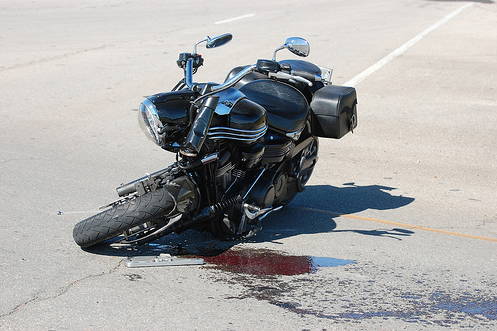
wrecked motorcycle

http://www.flickr.com/photos/gentleman_rook/ / CC BY-ND 2.0

How can you save money on motorcycle insurance? Pam King, who writes about such things for Direct General, a company dealing in motorcycle insurance, contacted me to ask if she could do a guest post here discussing that question. After reading her piece I told her yes, but that I would be adding my own comments in a few spots where I take a different view of the matter.

10 Simple Questions for Cheaper Motorcycle Insurance

Whether you’ve just purchased your first motorcycle or have been riding for years, motorcycle insurance can make a HUGE impact on your budget. As with auto insurance, your rates will depend on things like your age, the type of bike you own, your driving record, and your geographic location.

Aside from these factors, there are several other ways you can save money on your motorcycle insurance. All it takes is knowing the right questions to ask! Here are 10 questions to ask your insurance agent and potentially save yourself quite a bit of money on your policy.

1) Do you have a detailed copy of your current policy? If you currently have a motorcycle insurance policy, having it in front of you when talking to your agent can be a big help. The agent will want to know the specifics of your current coverage and how much you pay for each portion. This can help them determine the best rate – and hopefully save you money in the end.

2) Does your state require bodily injury coverage? Many locations require you to have bodily injury coverage, which pays for injury to others if the accident is your fault. In most states, the legal minimum is $10,000 per person, per accident. However, insurance companies recommend you carry as much as three times the minimum in case of litigation or a lawsuit.

Ask your insurance agent for the specifics of their policy, but as a rule, bodily injury coverage pays for the medical bills incurred by injured parties and their guests, the cost of repairing or replacing damaged property, the lost wages of the injured party, and more.

3) Can you afford to increase your deductible? Increasing your deductible, the amount you pay for a claim before insurance kicks in, is a great way to lower your monthly payments. Having a higher deductible will cost more if you get into an accident, but it can save you quite a bit of money from month-to-month. If you do increase your deductible, you may want to consider putting part of the money you save each month into a savings account. Then, this can be saved in case of a future accident.

Ken says: I hear this all the time and I personally take a different approach. Yes, you can reduce your monthly premium if you take a higher deductible, but if you have a single claim in 5 years or even more, what you save with the lower deductible can easily more than pay the extra premium amount. I can deal with paying a few dollars extra each month. I don’t want to get hit with that BIG expense all at once in case I have a claim.

4) Do you plan to ride with a guest? Unlike auto insurance, passengers aren’t automatically covered under a policy. If you plan on riding with guest — and this means ever — you’ll want to add guest passenger liability coverage to your policy. This will pay for any injuries your passenger gets while riding with you.

5) Do I need collision coverage? Take a look at the following factors. If any apply to you, you may want to consider dropping your collision coverage:

Your bike is more than five years old
Your bike is valued at less than $3,000
You’re a safe driver and haven’t had an accident in the last years
You’ve saved enough money to pay for repairs if needed

Talk with your insurance agent before you decide to drop it completely. They can help you determine if this is a good choice based on your deductibles and the value of your motorcycle.

Ken says: Both my bikes are more than 5 years old and I say yes to the other points except that my Concours is worth more than $3,000. I carry only liability on my Honda CB750 but I have collision on my Connie. The reason is the bodywork on the Connie. That stuff is expensive. Coupled with my low deductible, an accident that does not total the bike but causes serious damage would not cost me much, and it would more than justify my choices for a lot of years.

6) Do you need all the extras? Motorcycle insurance plans sometimes include things like roadside assistance, extra medical coverage, and towing. Sit down and consider whether or not you can live without these items, or if the money you’ll save by dropping them is worth it.

Ken says: This should be a no-brainer. Don’t pay extra for roadside assistance or towing: join the American Motorcyclist Association and get these at no extra charge as part of your membership, provided that you sign up for automatic renewal each year via credit card.

7) Do you want accessory or custom parts coverage? Some policies don’t cover the extras you add to your bike, even if they are damaged or destroyed in an accident. This includes things like highway pegs, radios, CBs, custom seats, a luggage rack, safety guards, and more. If you want coverage for these, be sure to add it to your policy. If you can live without it, don’t opt for the coverage and save yourself some money each month.

8) Do you plan to drive your bike to work? If not, let your insurance agent know. Some companies give discounts for putting less than a certain number of miles on your bike each year. Quite the opposite, others give discounts for using your bike for transportation to and from work. Of course, this will be something you’ll have to bring up with your agent to get the appropriate discount.

9) Do you live in a low-cost or high-cost area? If you plan to move in the near future or garage your bike in a different area than you live (For example, a vacation home), make sure to tell your agent this. Generally, the more urban the area you live, the higher your premium. And, rates can vary significantly from state to state. If your winters are spent in Arizona, but your bike is stored at home in South Dakota, your rates may be significantly different.

10) Do all drivers on your policy use the motorcycle? This is particularly important for young drivers. If you have a student who’s moved away to college and no longer drives the motorcycle, drop them from your policy. Why? Because the insurance rates are much higher for teens. However, be cautious–if you take a driver off your policy but they eventually take your bike out for a joy ride and have an accident, you’ll be liable for everything.

There you go, my friends. Consider the above questions before talking with your insurance agent about motorcycle insurance coverage. It will not only help you be well-informed, but will also help negotiate the best rates and save money in the long run.

About the Author:
Pam King writes on frugality, safety and insurance literacy for Direct General, a motorcycle insurance provider. When not saving money on her insurance, Pam enjoys knitting, NASCAR, family and watching rollerderby! :)

Recent from National Motorcycle Examiner
Helmets reduce cervical spine injury in crashes, study says

Biker Quote for Today

Sweat wipes off. Road-rash doesn’t.
Lane Splitting That Didn’t Happen

Monday, January 17th, 2011

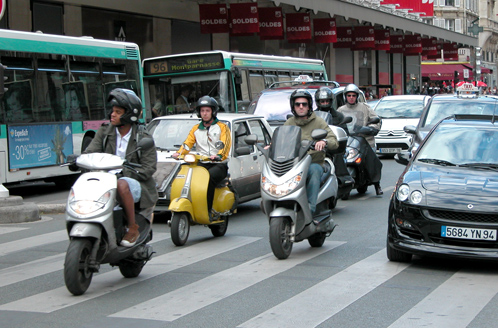
Lane-splitting in Paris

It’s 2011 and motorcyclists in Arizona are not legally permitted to lane-split. That’s only news because the legislature was in favor of allowing a test. The governor, however, had other ideas, and vetoed the legislation.

In Oregon it looks like it might be tried. The Governor’s Advisory Board on Motorcycle Safety held a public meeting on Nov. 19, 2010, and the hall was packed with motorcyclists speaking in favor. It’s up to the legislature now.

Lane-splitting, for anyone who doesn’t know, is when motorcycles ride up the middle between cars in two lanes. This usually only occurs in extremely slow-moving or completely stopped traffic. Except in France, of course. When my wife and I were in Paris some years ago we were amazed to see motorcyclists zipping not just up the middle but down the shoulder, along the dividers separating oncoming traffic, and all of this with traffic moving at full speed.

It was in the heart of Paris, though, where you could really see the sense of the idea. Every time a light turned red and traffic stopped, small motorcycles and scooters filtered through to the front and as soon as the light went green they were off! With quicker acceleration than cars, the two-wheelers were gone by the time the cars started to move and the cars just moseyed on their way. Riders in California, the only U.S. state where splitting is allowed, will tell you they cut half their commute time in that way. Each one of them also represents a car that is not on the highway creating even more congestion and smog.

I did have the opportunity to split when I was in California in October on the EagleRider media tour. On our last day we had come around the San Francisco Bay on the east in order to enter the city across the Golden Gate Bridge. We were making our way through Sausalito on city streets and cars were inevitably mixing in between our bikes. At a stoplight, I was the first of several riders behind a car, with more of our group in front of the car. The driver had left space ahead of her.

I turned to the guy to my left and motioned for him that we go around the car. He nodded and we did. Presto! A few more of our group were able to come around as well, the light turned green, and our partially reunited group took off.

Who knows when lane-splitting will come to any other states. California has been alone in this for a long time now. But maybe, if they give it a try in Oregon and it works out well, the dam may start to crumble.

Recent from National Motorcycle Examiner
Cyclepedia.com may be the wrenching motorcyclist’s best friend

Biker Quote for Today

It’s not a real sport unless you can die from massive internal injuries.

First Year Ever with More Miles on the Bikes

Monday, January 3rd, 2011

For the first time in more than 20 years on motorcycles I rode more miles than I drove last year. In fact, nearly double. I’m pretty amazed.

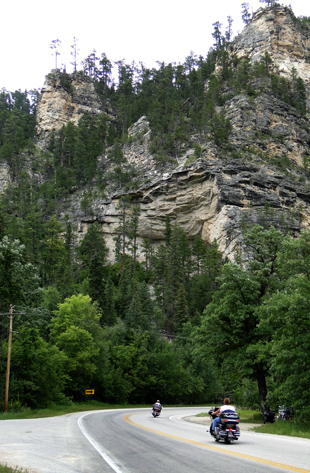
motorcycles in Spearfish CanyonEvery year on January 1 I check my odometers on all my vehicles to see how many miles I covered on each. This year I rode my Kawasaki Concours 10,004 miles. Not surprisingly, that’s also the first time I’ve ridden more than 10,000 miles on a bike in a year. In 2009 I rode the Kawi 5,016 miles.
My car, on the other hand, racked up only 5,581 miles. That compares with 8,660 miles in 2009.

I didn’t do much on my Honda CB750 Custom, partly because it spent too much of the year in the shop. Mileage for 2010 was only 662 miles, compared to 1,037 the year before.

Altogether that puts my bike mileage at 10,666 or a bit less than double the car. Double the car would be 11,162, so that’s about 500 shy.

I’m happy to say that a lot of those miles came from the fact that I took a lot more trips this past year. I went out to the Laughlin River Run, I went to the Sturgis Rally, and of course I went on the annual OFMC trip.

But all those miles also mean I rode more at home. I made it a point to use the bikes for transportation as much as possible, even when it would have been more convenient to drive my car. And I’ll continue doing that, too. I like being on the bike more. That’s what it’s all about, isn’t it? Riding the dang thing!?

Oh, and by the way, those figures actually don’t even represent all the miles I rode this past year. They do not include the four days I spent doing the EagleRider media tour in California, the dual-sporting I did on other people’s V-Stroms, or the week I got around exclusively on a scooter. So if you add those miles I did ride more than double the miles I drove in 2010.

I don’t know about you but I kind of like the sound of that.

Recent from National Motorcycle Examiner
New motorcycle-related laws kick in with the new year

Biker Quote for Today

Warning: If this bike is on a trailer it is being stolen.

I Didn’t See the Motorcycle

Thursday, December 30th, 2010

The most common words spoken by drivers who hit motorcyclists are, “I didn’t see him.” For a lot of riders, those words are unacceptable.

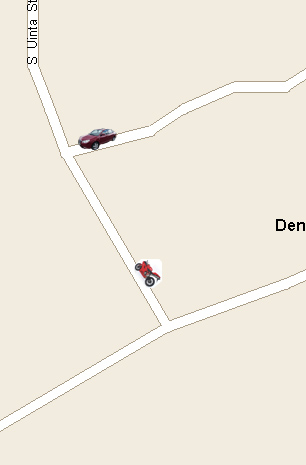
map of intersectionI’m sorry to say, however, they are often true. So like it or not, we who ride have to adjust to that fact in order to ensure our own safety.

My friend John is one of those who argue that any driver who hits a motorcyclist and claims “I didn’t see him” needs to go to jail. I agree that if the failure to see has to do with the driver paying attention to their cell phone or anything else other than driving, serious consequences are in order.

But that’s not always the case. I’ve told here previously of the time, many years ago, when I was in a car waiting to make a left turn off a main street. As I started to turn my passenger yelled at me to stop, and I did just in time not to hit a motorcyclist coming the other way. I didn’t see him. And I wasn’t doing anything other than driving. I just didn’t see him.

Well, it happened again now, just a week ago. It would take too many words to explain the streets so just look at the map. A guy on my block rides a Ducati. I left the house in my car and was at the end of the block intending to take a left turn to get out of the neighborhood. I looked left and right and started to pull out.

As I pulled out I saw–only then–that the guy on the Ducati was coming up the street. Now, he wasn’t going fast because he had just turned onto that street, and he was going to turn right anyway, so no harm was done. But the fact is, that Ducati has such a narrow profile when you look at it head on, that it’s a lot easier not to see than some big bagger with all the gear.

Studies have shown that motorcyclists and family members of motorcyclists are far more attuned to the presence of motorcycles on the streets, and thus are far less likely to get in crashes with them than the general populace. And yet here I am, a rider with many years on the bike, and I still did not see this guy. Needless to say, I found this very disturbing. I just did not see him. How could that be?

The bottom line on how it could be, however, is that it is. And that’s why we have to be responsible for our own safety. We have to ride as if we are invisible, always anticipating the stupid moves that those idiot cagers might pull–even if on some occasions the idiot cagers are also riders themselves.

I’m not making excuses, but every single one of us makes a mistake now and then. And it doesn’t matter to your shattered skull that your crash was due to some other guy’s mistake. We are responsible for our own safety. Accept that fact and act upon it and you’ll greatly enhance your chances of riding safely for many years to come.

Biker Quote for Today

Anticipate!-most “accidents” are predictable, and avoidable.

From the Government and Here to Help–Right!

Monday, December 13th, 2010

The Motorcycle Riders Foundation (MRF) sent out a release the other day that will make you just shake your head. They tell about a recent meeting with the National Highway Traffic Safety Administration (NHTSA) where the gap between the motorcyclists and the safety bureaucrats could not have been wider.

Motorcycle Riders Foundation logoRather than paraphrase it all I’ll just quote from the release:
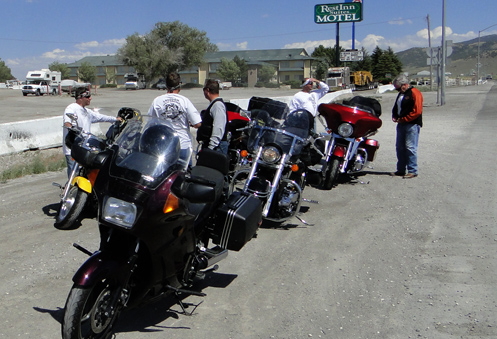
The government safety group continues to deny that the recent drop in motorcycle fatalities could have anything to do with education and awareness, instead maintaining that that the decrease was a result of people riding less. However, the Motorcycle Industry Council (MIC) reported that during the same time period, 2008-2009, vehicle miles traveled for motorcycles were up 6.8% or 27.6 billion miles in the U.S. The MIC also reported that tire sales, a unique measure of motorcycle use, were also up 9.6% in 2008-2009.

NHTSA also continued to defend their discriminatory practice of funding motorcycle-only roadside checkpoints, including their recent $40,000 award to Georgia’s Department of Public Safety. The idea is based on no science or research, but simply the notion that pulling every motorcycle off the road at the discretion of law enforcement will “save lives.”

Another interesting note in this broadly focused release is information on how the incoming Republican Congressional leadership relates to the motorcycling community. The MRF says that John Boehner (R-OH), who will be the next Speaker of the House, “has been a long-time friend of the MRF and ABATE of Ohio, and we look forward to continuing working with him in his new role.”

The MRF also notes that “The new chair of the powerful U.S. House Committee on Transportation and Infrastructure (T&I) will be John Mica (R-FL). Representative Mica has been a constant supporter of the MRF and all of our initiatives, as well as a very staunch advocate for ABATE of Florida.”

That bit about Boehner puts an interesting perspective on things. I know that for far-left Democrats, Boehner is seen as really evil. And yet if you’re a motorcyclist you have to think that maybe there’s more to him than just “evil.” It goes both ways, of course. Far-right Republicans also seem to see certain Democrats as pure evil. Gosh, maybe that’s not really true.

You’ll notice I used the terms “far-left” and “far-right” rather than just “Democrats” or “Republicans.” That’s to make the point that most Americans are much closer to the middle than to the extremes, regardless of which party they’re affiliated with.

Excuse the political interjection into what is normally a motorcycle-focused blog, but just this morning I’ve been watching online the launch of an organization called No Labels, website www.NoLabels.org. The group’s basis is in pushing elected officials of both parties to put aside partisan bickering and do what’s right for the country. Wow, what a concept.

I’ll make a deal with you. I’ll stop demonizing your guy if you’ll stop demonizing mine. And then let’s both push them to get things done to get this country moving again, even if it means compromising with each other.

Biker Quote for Today

Dream as if you’ll live forever, live as if you’ll die today. –James Dean

Know State Motorcycle Laws When You Travel

Monday, November 29th, 2010

The OFMC at a stop

We were coming down from the Black Hills and had been in Nebraska for about an hour when we stopped at a table along the road. There was another guy there, in a car, and we struck up a conversation with him. Along the way he mentioned, “This is a bucket state, by the way.”

Oh really? We hadn’t known that and we had been riding without helmets on. Oops. We had done the same thing a year or two earlier when we rode into Nevada for the first time. Somehow we got all the way to Las Vegas before we learned they required helmets.

Of course that was a long time ago, before the Internet, and we could be excused our ignorance. Back then it wasn’t easy to know what different state laws are. And if a state does require helmets, why the heck don’t they put up a sign at the border that says so?

There’s no excuse anymore for being ignorant of the laws in a state you’ll be riding to. The Internet does exist now, and one excellent place to check up on all states is a handy page on the American Motorcyclist Association’s website. You go there and there’s a map of the U.S. Click on the state you want to know about and it takes you to a listing of what they require and forbid.

The very first item on the list, presumably because this is the most common question, is the helmet requirements, if any. Other information includes the following:

  • Safety Helmet
  • State Funded Rider Ed
  • Eye Protection
  • Daytime Use of Headlight
  • Passenger Seat
  • Passenger Footrest
  • Passenger Age Restriction
  • Helmet Speakers
  • Periodic Safety Inspection
  • Mirror Left(L) Right(R)
  • Radar Detector
  • Turn Signals
  • Muffler
  • Maximum Sound Level
  • State Insurance Requirements
  • Handlebar Height
  • Rider-Education
  • Accept Motorcycle Endorsement From Other States
  • Accept RiderEd Completion Card From Other States
  • Motorcycles operating two abreast in same lane
  • Lane Splitting
  • Lemon Law Coverage

I’ll bet you didn’t even know that some states have requirements or prohibitions in some of these areas. Heck, you might even learn something about your own state laws.

Any by the way, the page also has separate legal requirements for off-road bikes. All in all it’s a lot of good information.

Recent from National Motorcycle Examiner
Fly and be groped or ride and have fun: Your choice

Biker Quote for Today

Remember when sex was safe and motorcycles were dangerous?