Archive for the ‘Biker Issues’ Category

AMA Urges Comments on Resource Management Plan That Would Limit Riding

Thursday, January 12th, 2012

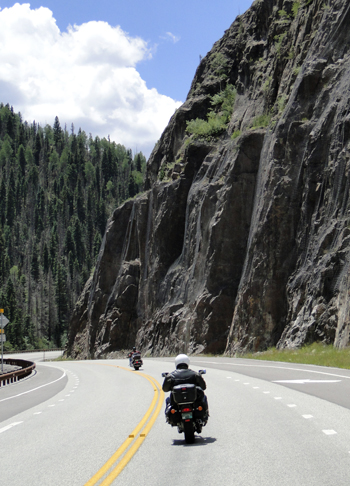
Riding in the hills above Lake City

January 17 is the deadline for comments on a proposed Resource Management Plan (RMP) put together by the Colorado River Valley (CRVO) Glenwood Springs field office of the federal Bureau of Land Management (BLM). After studying the plan the American Motorcyclist Association (AMA) has issued an alert stating that “The current proposed RMP calls for a significant decrease in the number of miles for off-highway vehicle use as well as a total elimination of all cross country travel,” and urging motorcyclists to register their concerns with the plan. Letters should be sent to:

BLM CO River Valley Field Office
2300 River Frontage Rd.
Silt, CO 81652

Or you can email your comments to cormpkg@ttsfo.com.

Limitations proposed by the plan include the following.

  • Eliminate all cross-country travel currently allowed on 123,000 acres
  • Decrease designated route mileage for full-size vehicles from 760 miles to 470 miles
  • Decrease designated route mileage for ATVs from 82 miles to 62 miles
  • Decrease designated single-track route mileage for motorcycles from 85 miles to 66 miles
  • Closure of an additional 47,900 acres currently open to snowmobile recreation
  • Closure to snowmobile usage on anything other than a trail on an additional 14,800 acres

The particular issues the AMA has with the plan, and what they consider the talking points to be raised in making comments, include the following.

  • There is a lot of information provided in the plan for different uses; however it is disorganized and hard to review.
  • Travel management analysis and decisions appear to have been overlooked in the development of the plan and there is no analysis offered as to why all routes closed to motorized usage are assumed to be available for non-motorized and mechanized usage going forward. The lack of analysis for travel management related issues is a violation of NEPA’s requirements for a detailed statement of high quality information of why decisions in the Plan have been made.
  • Motorized users are the only loser in the plan as travel management is the first tool used to address management issues that have nothing to do with travel management, like big game hunting issues and cave management.
  • Alternative D is the best alternative but it still fails to address usage trends on the CRVO.
  • Alternative C is very weak scientifically and violates both state and federal planning guidelines.
  • The Plan moves to a fully designated trail system for all users; however the stated benefits of the proposed changes are simply not addressed. The Plan does not analyze why this protection is not enough and further closures are necessary, when most habitat management plans never identify the need for any trail closures to protect the species.
  • Loss of the Gypsum Hills Special Recreation Management Area (SRMA) is unfair and runs counter to the reason it was originally created (to off-set the impacts of two Wilderness Study Areas (WSA’s). The WSA’s are still present and the SRMA should not be removed until there is a proposal to re-open the WSAs.
  • User conflicts are often overstated to obtain closures for other reasons and most user conflicts can be addressed without the closures of trails and roads.
  • Closure of the Hardscrabble Area for motorized access and subsequent designation of the Hardscrabble area for targeted recreational motorsports activities is inconsistent. This plan fails to give any analysis of the existing motorized opportunities that will be lost in the Hardscrabble area.
  • Many of the Wilderness characteristic areas and areas of critical environmental concern designations are inconsistent or conflicting.
  • Many proposed management standards violate multiple usage requirements such as the standard of managing all big game habitats to optimum standards

Recent from National Motorcycle Examiner
Safety advocate group includes helmet laws in 15-item list

Biker Quote for Today

Life is long enough – it just isn’t wide enough. Although I do enjoy a good single track now and then!

Motorcycle Safety: A Good Answer to ‘Why Not?’

Thursday, December 15th, 2011

We all know those signs over the highways that alert you to problems, scheduled closures, and such. And during May, which is designated Motorcycle Safety Awareness Month, those signs typically carry the message for drivers to be aware and watch out for motorcycles on the road with them.

The CDOT logoThis past May, my wife Judy asked the question, “Why do they only have that message during May? Why don’t they put that up there all year?”

I can now answer that question, and it’s actually a good answer.

Last week I attended a meeting at the Colorado Department of Transportation and one of the people there was Heather Halpape, who works in public relations with CDOT. At one point in the meeting she spoke about messages on those signs so afterward I asked her Judy’s question. Here’s what she said.

First, they do put up that message more often than just in May. They also put it up in August during the time around the Sturgis rally because there are a lot of bikes moving through the state to or from Sturgis. She said there is one other time when they use it as well, though she couldn’t remember off hand when that is.

Second, although the message is an attempt to promote safe driving, it can actually create less-safe conditions. Those signs don’t always have messages on them, but when they do, people make a point to read them. This can lead slowdowns and congestion. We saw that just this past weekend as we were coming down I-25 past the Yale exit. The sign there was alerting people to a closure at Belleview, and we hit congestion approaching that sign. After the sign, traffic sped up and the congestion cleared.

Third, people have been trained that messages are only put on the signs if the matter is important. So they make a point to read them. If there was always a message of some kind, that would just become routine and people would start to ignore the signs. And of course, that would defeat the purpose.

So there you go. Judy had a good question but Heather had a good answer that shows the people working for the state have given real thought to the matter. Kudos to CDOT.

Recent from National Motorcycle Examiner
NHTSA measure advances without helmet mandate

Biker Quote for Today

Don’t let my motorcycle ride interfere with the safety of your phone call.

Rider Training Program Threatened

Thursday, December 8th, 2011

Are you aware that when you renew your plates on your motorcycle(s) each year in Colorado you pay $4 that goes into a fund to help defray the cost of rider training courses? Also, anyone renewing their driver’s license with motorcycle accreditation pays an extra $2 that goes to the same fund.

MOST logoThis is all set in place because some years ago the motorcycling community asked for it. The general idea is that it is a good thing for everybody to have the folks riding motorcycles actually get some training so they can do it competently. The accompanying concept was that such a program could help to forestall proposals that Colorado institute a mandatory helmet law. That is to say, education and better riding skills do more to prevent traffic fatalities than wearing helmets. Or, to put it differently, crash prevention is better than having safer crashes.

Regardless of how you might feel about helmet laws, I don’t see how anyone can argue that it is not better to avoid crashing than to crash and not get hurt so badly.

The vehicle for this funneling of fees to rider training is Colorado’s Motorcycle Operator Safety Training program or MOST. MOST is now under attack, in some cases from organizations that originally supported its creation.

I could go on at great length with the history and background of what is currently going on, as ABATE of Colorado’s State Coordinator Terry Howard did with me, but I’ll give you the short version.

ABATE, Riders for Justice, some of the motorcycle clubs, dealerships, and others pushed for the training approach. Over the years the program was not given sufficient oversight and some problems developed. The Colorado Legislature this past year conducted an audit of the program and identified a number of issues. Several of those issues were immediately addressed and rectified and the rest will soon have been fixed.

In the meantime, however, new people have replaced the old, and in organizations such as the Colorado Confederation of Clubs (COC) which came into existence later, there is no understanding of the history of and reasons for the fees. Some of the previous supporters are now saying, “Why should we have to pay to reduce the cost for other people to learn to ride?”

In a twist that gives fits to Terry Howard, a Republican, the legislative audit committee was divided on party lines–with the Republicans being the ones she finds herself in opposition to. In the current anti-tax atmosphere, the Republicans on the committee are in favor of eliminating MOST and letting us keep our $4 and $2 fees. It is the Democrats who are saying, “The motorcyclists asked for this program, and for these fees to be levied on them, so let’s keep the fees and keep the program they fund.”

One other thing to keep in mind: If MOST is killed there is no certainty that the fees will be eliminated. We could end up paying the fees without getting the benefit.

The committee deadlocked in this past session, but it seems likely that Republican Rep. Marsha Looper, of Colorado Springs, will introduce legislation in the next session to kill MOST. This would be a good topic for all Colorado motorcyclists to learn more about, and then do what you can to educate your legislators, whether you support MOST or oppose it. Most of them don’t know anything at all about it.

Recent from National Motorcycle Examiner
NHTSA proposes additional naturalistic motorcycle safety study

Biker Quote for Today

Statistics show that most solo motorcycle accidents are caused by a defective nut holding the handlebars.

ABATE Considers Ending Red River Rally Boycott

Monday, November 21st, 2011

It was a statement that many felt needed to be made, but time moves ahead and sometimes you just have to let it go.

Bikers passing on a New Mexico roadAt the request of ABATE of Colorado‘s southern districts, the group’s long-standing boycott of the Red River Rally, in Red River, NM, may be coming to an end.

The boycott was agreed upon following a fatal crash during the 2004 rally and the aftermath of that incident. A 15-year-old boy, without a driver’s license, was playing chicken with a friend and ran head-on into two motorcycles carrying four people. Two of the four died and one was severely injured, losing a leg among other injuries. The four were all Coloradans and ABATE members.

Authorities in Taos County, where the incident occurred, chose only to order the boy into counseling, levied a $175 fine, and allowed him to keep his learner’s permit. That was too much to take, and ABATE voted to institute the boycott. The idea was to stop Colorado dollars from bolstering the economy in the Red River area by keeping Colorado riders away from the rally.

According to Terry Howard, state coordinator for ABATE of Colorado, the boycott was reasonably effective the first year but each year less so. Now, the southern districts feel that continuing the boycott is hindering their efforts to attract members, and they have asked that it be ended. Each ABATE district has been asked to vote on whether they agree with the move, and the matter will then be decided at the next state board meeting.

Recent from National Motorcycle Examiner
Stay alert! Danger on the road

Biker Quote for Today

ATGATT: Cooler than a skin graft.

Wrenching 101

Monday, October 24th, 2011

Motorcycle Maintenance 101

I’ve never been afraid to get my hands dirty, but that doesn’t mean I’ve ever been all that much of a mechanic. Granted, with the guidance of some experienced friends I did once drop a new engine into a 1964 Ford Fairlane, but that was long ago and far away.

When it comes to my motorcycles I have always been the guy paying someone else to do all but the most basic maintenance. Heck, I’ve never even replaced a tire. I generally replace oil and filters, and adjust the chain on my old Honda CB750, and that’s about it. I did replace the shift-shaft seal on the Honda recently.

I’m open to learning more. To that end, I plan to attend a basic motorcycle maintenance session the Erico Motorsports is offering on Saturday, Nov. 5. Here’s what they intend to cover:

  1. Chain/chassis lubrication and adjustment
  2. Oil level inspection and change along with coolant level checks
  3. Brake pad and fluid inspection
  4. Inspection of tires along with correct tire pressure settings
  5. Frame and suspension inspection
  6. General safety check
  7. Benefits of a dynamometer and power commander
  8. Set up for storage/winterization
  9. Pre-ride inspection
  10. Scheduled maintenance
  11. Performance enhancement

Of course I have two interests in doing this. First, I’m hoping I might learn something. Second, I figure it will be an interesting session to write about.

In case you’re interested, you’ll need to contact Tai Beldock at Erico to RSVP at tai@ericomotorsports.com. There is no charge but they’ll be providing lunch and want to have an idea how many people to expect.

So stay tuned. Or maybe I’ll see you there. If you do come, please find me and introduce yourself. I’ll be the guy shooting pictures. I love meeting the folks who visit my website.

Recent from National Motorcycle Examiner
Butler Maps goes backcountry

Biker Quote for Today

Bikes are a ton easier to push through doorways when the guy on the bike isn’t holding the brake.

Guest Post: Motorcycle Safety Tips To Ensure A Good Ride

Sunday, October 9th, 2011

Motorcycles riding through Central City

This guest post has been provided by Sarah Henderson. Sarah is into road safety and making our roads much more safe for cyclists and also motorists. Click here for more information. I hope you’ll find it useful and perhaps thought-provoking.

Motorcycle Safety Tips

There’s nothing like the feel of riding your bike on a beautiful, sunny day. Staying safe on the bike is really up to you. Here are some tips to help you stay safe when you’re out on the bike.

Bike Maintenance

Give your bike a quick check once in a while to ensure that everything is working. Check the lights, brake lights, turn signals and oil on a regular basis. Look at cables to be sure they aren’t frayed or worn and lube the train.

Gear

Quality gear can make the difference in an accident. The helmet should fit well and snugly. It should have the DOT label to show that it meets federal standards. Quality leather pants and a jacket not only look sharp, they also help protect you from road debris. Black is the natural choice, but a brighter color will make you more visible to other drivers. Gloves should be non-slip and the shoes you put on should cover the ankles.

Respect

Motorcycles are naturally harder to see. Engaging in risky behavior like riding on the shoulder or weaving through traffic will increase your chances of being in an accident. It’s also important to obey the speed limit when riding and, of course, never drink alcohol or take drugs before hitting the open road.

Assumptions

Normally, you want to avoid making any assumptions. But when you’re on a bike, there are some that make sense. Assume that there is a car in the lane you want to merge into and check on its location. Further, assume that the driver in that car has not noticed you and proceed with caution.

Take a Rider Safety Class

There are classes available to help make you a safer rider. Consider signing up for one of these affordable classes so you can spend more time enjoying the road and less time dealing with accidents. Plus, several insurance companies offer a discount on insurance premiums if you take a safety course. Allstate Insurance, for example, will reward you with a five percent discount on insurance premiums if you take a motorcycle safety class. Nationwide is another insurance company that will insure your bike and give you a five percent discount for taking a safety course.

Remember that Drivers are Blind

It’s not a conscious choice, but it is a fact that far too many drivers just don’t notice motorcycles. Motorcycle awareness, or the lack thereof, is often cited by the National Highway Traffic Safety Association a leading factor in motorcycle accidents. Make yourself more visible by using your turn signals when possible. Take the time to check your mirror before braking so you can not only watch the object in front of you, but also the car behind you to be sure it is slowing down.

Smooth Riding

Easy accelerations, gentle braking using both brakes, proper gear choice and smooth steering will help you stay safe. Your bike will hold traction on the road better and you will be less likely to land in a ditch.

Slow Down when Necessary

If visibility is poor or the car ahead of you is slowing down, you need to slow down, also. Keep the speed in line with what you can see and leave a distance between you and the car ahead of you.

Recent from National Motorcycle Examiner
Royal Enfield making inroads in US

Biker Quote for Today

Gear: Because walking away in disgust beats riding away in an ambulance.